
A water bill that rises without a clear reason, a bathroom floor that never seems fully dry, or the faint sound of water moving when every fixture is off can point to the same problem. Knowing how to find hidden leaks early can limit water waste and help protect your home or business from a more disruptive plumbing repair later.
Not every leak leaves a puddle under a sink. Some develop behind walls, beneath floors, inside ceilings, or on water lines below a concrete slab. The goal is not to tear into finishes looking for the source. It is to watch for patterns, perform a few safe checks, and call a plumbing professional when the evidence points to a concealed leak.
Start With the Water Meter
Your water meter is often the clearest first indicator of a hidden plumbing leak. Choose a time when no one will need water for at least 30 minutes. Turn off faucets, shower valves, washing machines, dishwashers, ice makers, and irrigation controls. Make sure toilets are not refilling.
Locate the meter, usually near the front property line or in a meter box. Many meters have a small leak indicator that moves when even a small amount of water passes through the line. Take a photo of the meter reading, wait 30 to 60 minutes without using water, then check it again. If the indicator moved or the reading changed, water is likely flowing somewhere it should not be.
This test confirms a potential leak, but it does not identify its location. A running toilet, a dripping outdoor faucet, an irrigation issue, or a leak under the home can all produce the same result. The next step is narrowing down the source.
Rule Out Toilets and Visible Fixtures
Toilets are one of the most common reasons a meter test shows water use. A worn flapper can let water pass silently from the tank into the bowl for hours. Listen for occasional refilling when no one has flushed, and look for ripples in the bowl after the toilet has been sitting unused.
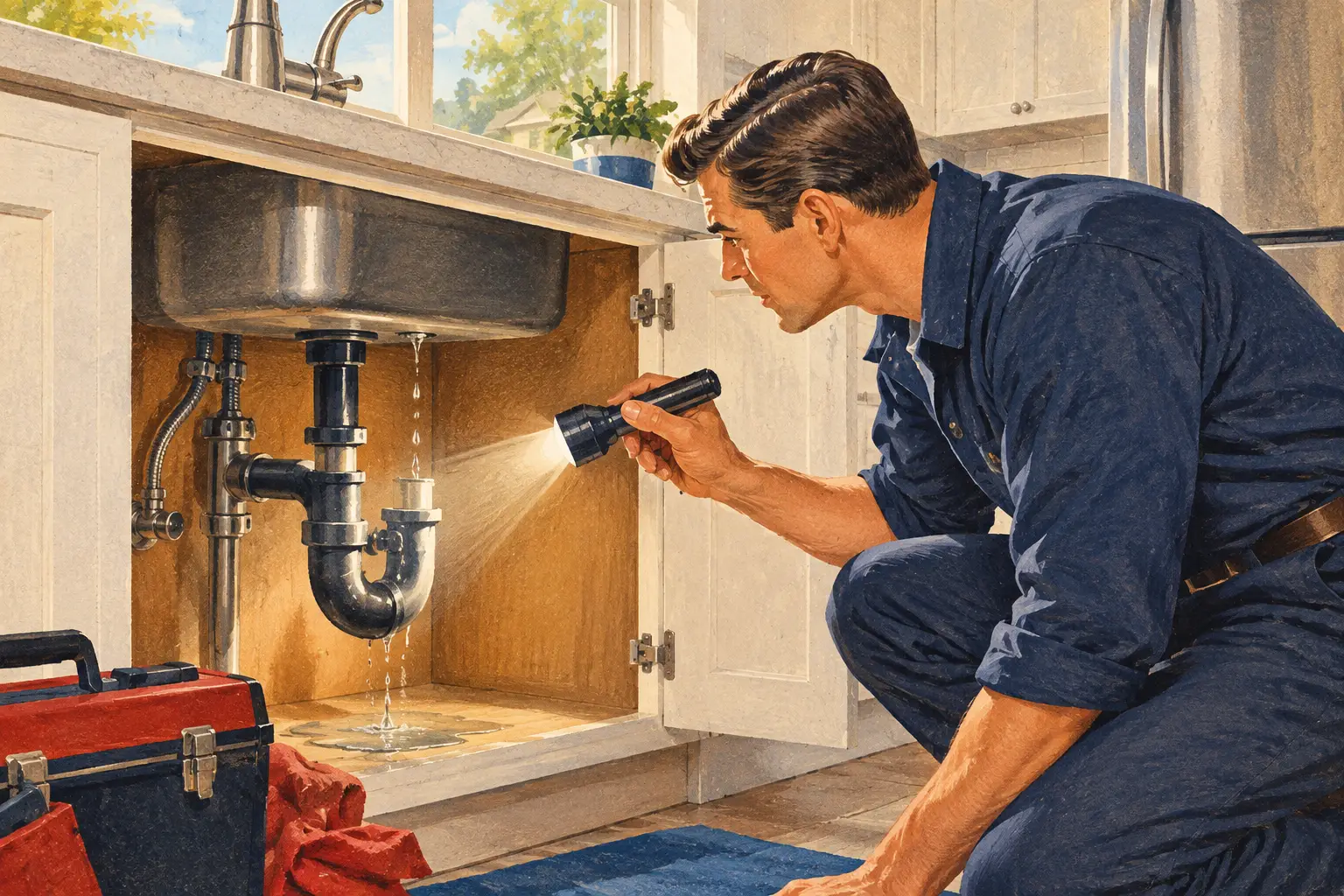
Check exposed plumbing under sinks, around water heaters, behind refrigerators with water connections, and at washing machine supply hoses. Look for active drips, corrosion around fittings, damp cabinet bottoms, or mineral buildup. An outdoor spigot that drips after it is shut off is also worth repairing, even if it is not the main source of a higher water bill.
If you find and correct an obvious issue, repeat the meter test. If the meter still moves with all water off, the leak may be in a concealed supply line or another hard-to-reach area.
Signs of a Hidden Leak Inside the Building
Concealed leaks usually leave indirect clues before they become visible water damage. Pay attention to changes that do not have another easy explanation, especially if they keep returning after you clean or dry the area.
A warm or unusually cool spot on a floor can indicate a leak in a line beneath it. This is particularly relevant in homes with plumbing routed through or under a slab. Flooring that begins to cup, lift, soften, or separate can also signal moisture below the surface.
Walls and ceilings may show discoloration, bubbling paint, peeling texture, or a section that feels softer than the surrounding material. A musty odor in a closed room, cabinet, hallway, or utility area may mean moisture is collecting where air does not circulate well. Do not assume a small stain is old simply because it is dry to the touch. Mark the edge lightly with painter's tape and check whether it expands over the next day or two.
Other common warning signs include:
- A noticeable increase in your water bill without a change in household use
- The sound of running, hissing, or dripping water when fixtures are off
- Lower-than-normal water pressure at several fixtures
- A water heater that runs more often than usual
- Damp carpet, loose baseboards, or unexplained floor discoloration
One sign alone does not always confirm a hidden leak. Several signs occurring together, however, deserve prompt attention.
Check Outdoor Plumbing and Irrigation Lines
A leak outside can be easy to miss because the water may soak into soil instead of forming a visible puddle. Walk around the property and inspect hose bibs, exposed pipes, irrigation valve boxes, and areas near the foundation. Look for unusually green patches of grass, soil that stays soft during dry weather, pooling water, or a section of landscaping that seems consistently wetter than nearby areas.
If your home has an automatic irrigation system, turn it off before repeating the meter test. A damaged underground irrigation line can cause meter movement even when indoor fixtures are off. Property managers should also check vacant units and common-area fixtures, since a small leak can continue unnoticed when a building is unoccupied.
How to Find Hidden Leaks by Isolating the Problem
When the meter indicates water use but no visible fixture is leaking, isolation can help determine whether the issue is inside the building or on the main service line. Start by shutting off the main water valve to the building, then check the meter again after a short waiting period.
If the meter continues to show water flow after the building's main shutoff is closed, the issue may be on the line between the meter and the shutoff valve. If the meter stops moving once the valve is closed, the leak is more likely within the building plumbing.
Valve locations and plumbing layouts vary. Use caution if a shutoff valve is old, difficult to turn, or shows corrosion. Forcing it can create a separate problem. If you are not confident operating the valve, a plumber can perform this testing and interpret the results without guesswork.
When a Hidden Leak Needs Professional Detection
A meter test and visual inspection are useful screening tools, but they cannot pinpoint a leak behind a finished wall, under flooring, or below a slab. That is where professional leak detection makes a difference. A plumber can use specialized methods to trace likely leak locations while minimizing unnecessary demolition.
Call for professional help promptly if you have a moving water meter with all fixtures off, recurring dampness, changing floor temperatures, unexplained low pressure, or water appearing from a wall, ceiling, or floor. If water is near outlets, appliances, or electrical panels, avoid the area when possible, shut off the water if it is safe to do so, and seek immediate service.
Waiting can turn a manageable repair into a larger restoration project. The same is true for commercial properties, where a concealed leak can disrupt tenants, staff, or customers before anyone sees the source.
For homeowners and property managers in Plano, McKinney, Allen, Royse City, and nearby North Texas communities, MasterTex Plumbing and Drain can help investigate suspected hidden leaks and recommend the right repair based on what is actually found.
Prevent Small Leaks From Becoming Bigger Disruptions
You cannot prevent every plumbing leak, but regular observation catches many of them early. Review water bills from month to month, occasionally inspect exposed supply lines, and test your meter when something seems off. Pay close attention after a freeze, a plumbing repair, or a period when the property has been vacant.
Avoid covering warning signs with a new rug, fresh paint, or a dehumidifier before the cause is understood. Those steps may make a room look better temporarily, but they do not stop water from moving through a damaged line.
The most helpful next step is simple: when your meter, floors, walls, or water bill suggest a leak, act while the signs are still small. A timely inspection can replace uncertainty with a clear answer and a practical path forward.