
A frozen pipe can turn from a cold-weather inconvenience into a water-damage emergency quickly. Frozen pipe repair starts with protecting the property: stop the water if needed, avoid risky thawing methods, and get professional help before a cracked pipe begins leaking behind a wall or ceiling.
North Texas freezes are often brief, which can make them easy to underestimate. Pipes in exterior walls, garages, attics, crawlspaces, and unheated rooms may be exposed long before the rest of the home feels especially cold. Property managers and business owners face the same concern in vacant units, utility rooms, and buildings with plumbing near exterior doors.
What Happens When a Pipe Freezes
Water expands as it freezes. Inside a pipe, that expansion can create pressure between the ice blockage and a closed faucet or valve. The pipe may split at the frozen section, but it can also crack elsewhere along the line where the pressure is highest.
A frozen pipe is not always a broken pipe. In many cases, there is no visible leak until temperatures rise and the ice thaws. That is why a pipe that appears intact during a freeze still deserves attention. Once water begins moving again, even a small split can release a surprising amount of water.
Common warning signs include little or no water flowing from one fixture, frost on exposed piping, unusual sounds when a faucet is opened, or a cold room with plumbing along an exterior wall. A damp cabinet, water stain, dripping ceiling, or puddle is a stronger sign that the pipe may already be damaged.
Frozen Pipe Repair Starts With Controlling Water
If a pipe has burst, is actively leaking, or you cannot tell whether it is damaged, turn off the home's main water supply. Everyone responsible for a property should know where this valve is located before freezing weather arrives. For a business or rental property, make sure the person on site can reach it without searching through a locked mechanical room or storage area.
After shutting off the water, open nearby faucets to relieve pressure and allow remaining water to drain from the line. If water is near electrical outlets, appliances, or a breaker panel, avoid the area and contact a qualified professional immediately. Do not stand in water while operating electrical equipment.
If there is no visible leak and water still flows normally from other fixtures, you may be dealing with a localized freeze. Keep the affected faucet open slightly while the pipe is being warmed. A small flow of water can help reduce pressure as ice begins to melt.
How to Thaw a Frozen Pipe Safely
Only attempt to thaw a pipe when you can identify the frozen section, safely access it, and see no evidence of a break. The goal is gradual, controlled warming, not intense heat.
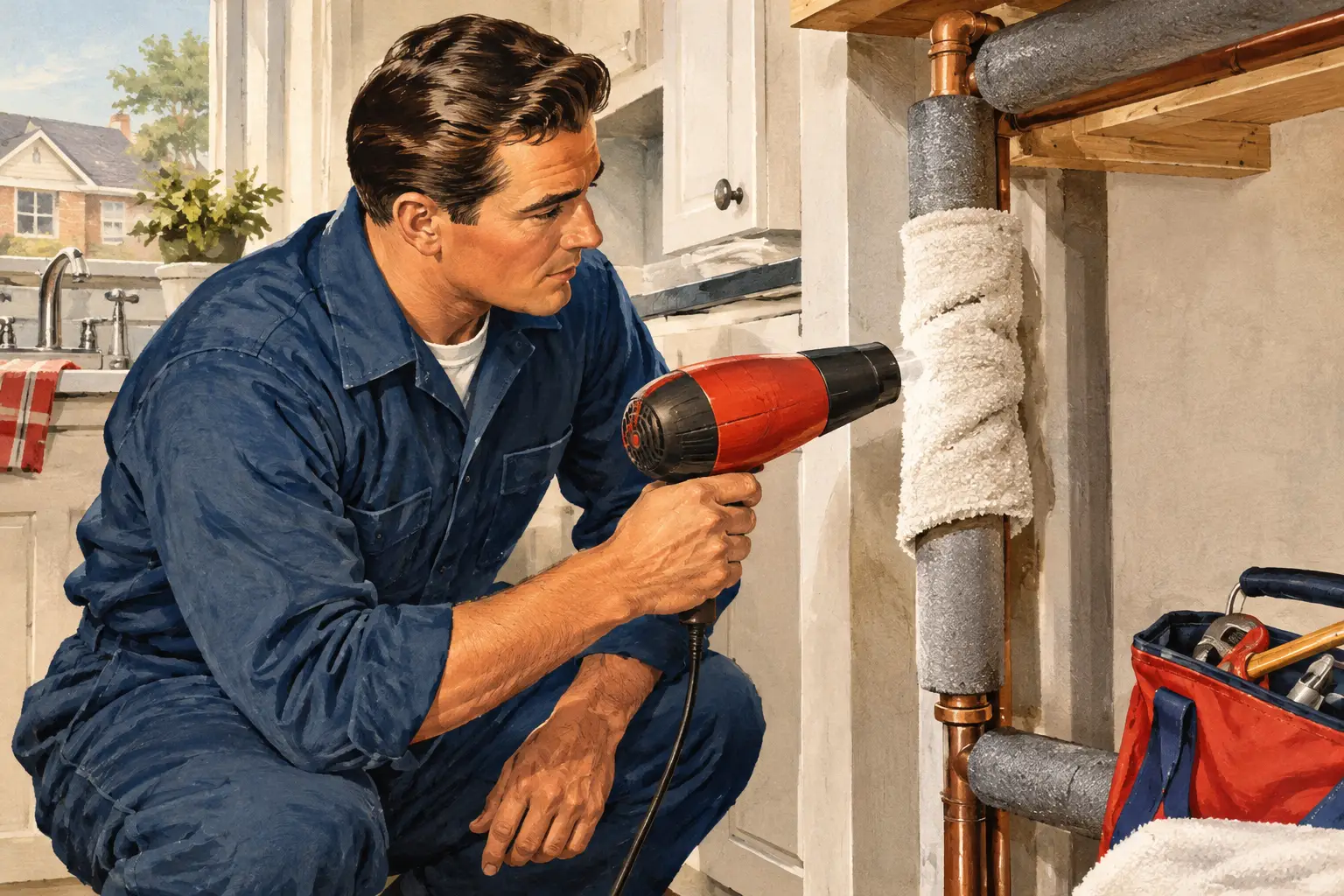
A hair dryer on a low or medium setting, warm towels, or a space heater positioned safely away from flammable materials can be appropriate for exposed pipes. Start warming near the faucet and work slowly toward the colder section. This gives melting water a route to escape instead of trapping it behind ice.
Never use an open flame, propane torch, charcoal grill, or other combustion source to thaw plumbing. These methods can damage the pipe, ignite nearby materials, or create a carbon monoxide hazard. Avoid using high heat on plastic piping as well, since excessive heat can warp or weaken it.
If the pipe is hidden behind a wall, under a floor, or in a hard-to-reach attic area, it is usually best to stop there and call a plumber. Opening walls without confirming the source can create more disruption, and hidden pipe damage may not be obvious until water begins flowing again.
Watch the Pipe While It Thaws
Stay nearby during thawing. As water pressure returns, inspect the entire accessible pipe for drips, bulges, cracks, or damp connections. Check the surrounding cabinet, wall, floor, and ceiling below the pipe as well.
If you see even a small leak, turn off the water and arrange for repair. Temporary measures may limit immediate dripping, but a damaged pipe needs a proper repair that restores the line's reliability. This is especially true for piping inside walls or ceilings, where an unnoticed leak can continue after the visible symptoms fade.
When You Need Professional Frozen Pipe Repair
Some frozen plumbing situations should be treated as urgent. Call a professional plumber when a pipe has split, the water supply will not shut off, water is leaking into walls or ceilings, or the frozen section is inaccessible. Professional help is also the right choice when several fixtures have lost water pressure, which may point to a larger freeze or another issue affecting the supply line.
A plumber can locate the affected section, thaw exposed piping safely when appropriate, repair damaged pipe and fittings, and check for related concerns. The repair approach depends on the material, location, extent of the damage, and whether the surrounding area has been affected by water. A simple accessible repair is very different from a break inside a wall, beneath a slab, or above a finished ceiling.
For homeowners and property managers in Plano, McKinney, Allen, Richardson, Rockwall, Royse City, and surrounding North Texas communities, a prompt response matters. MasterTex Plumbing and Drain can help assess frozen or burst pipe concerns and complete the plumbing repair needed to get the property functioning again.
Preventing the Next Freeze
The best prevention plan focuses on the plumbing most exposed to cold air. During a hard freeze, keep garage doors closed, close vents that bring cold outdoor air into crawlspaces where appropriate, and maintain indoor heat throughout the building. Do not lower the thermostat dramatically overnight or while away, even if the property is vacant.
Open cabinet doors under kitchen and bathroom sinks located on exterior walls so warmer indoor air can circulate around the pipes. Disconnect outdoor hoses and protect exterior faucets before freezing conditions arrive. If a building has a known cold spot, such as a poorly insulated exterior wall or garage supply line, have the plumbing inspected before the next cold snap.
For vacant homes and commercial spaces, regular checks are worth the effort during freezing weather. A property can sustain damage for hours before anyone notices a burst line. Confirm that heat is operating, look for unusual water usage, and make sure the main shutoff valve remains accessible.
Do Not Ignore a Past Freeze
If a pipe froze but did not visibly leak, pay attention to it after temperatures rise. Repeated freezing can stress pipes, fittings, and joints. A professional inspection can help identify exposed sections and practical improvements before the next cold front.
Frozen pipes are stressful, but fast, calm action limits the disruption. Protect the water supply first, use only safe warming methods on accessible pipes, and call for help whenever there is a leak, uncertainty, or hidden plumbing involved.