
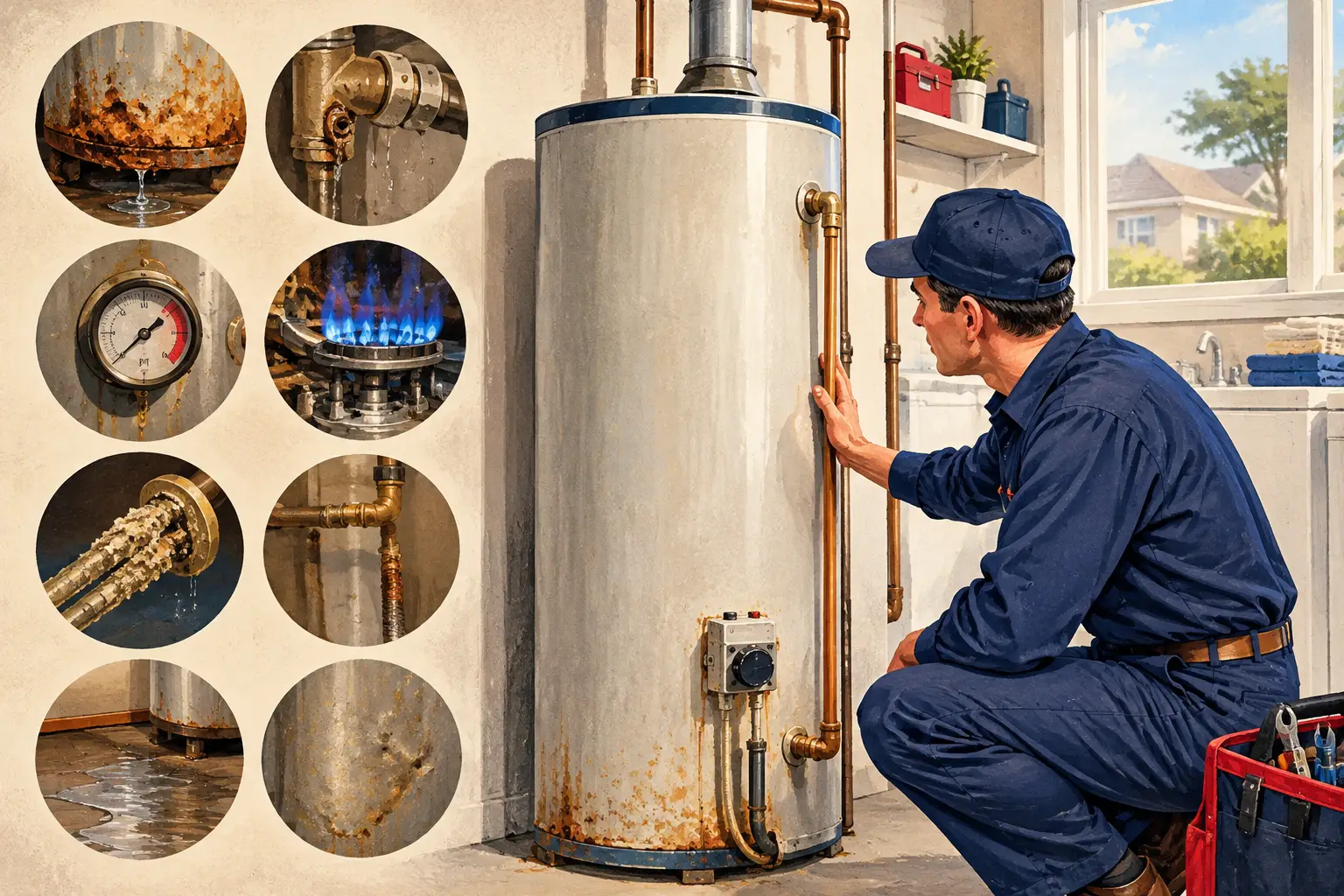
A water heater rarely quits at a convenient time. It often starts with a shorter supply of hot water, an unfamiliar rumbling sound, or a small puddle near the tank. Knowing when to replace a water heater can help you plan ahead instead of dealing with a cold shower or water damage after a sudden failure.
For homeowners and property managers, the right choice is not always obvious. A repair can make sense for a newer unit with one isolated issue. But an older heater with corrosion, repeated repairs, or a leaking tank usually needs replacement. A professional inspection can clarify the condition of the unit and help you make a practical decision.
When to Replace a Water Heater Instead of Repairing It
Age is usually the first factor. Most standard tank-style water heaters last about 8 to 12 years, though maintenance, water conditions, installation quality, and usage all affect that range. If you do not know the age, check the manufacturer label or serial number. The serial number often includes the month and year the unit was made.
Once a tank water heater reaches the 10-year mark, it deserves closer attention, even if it still produces hot water. Internal corrosion can develop out of sight, and a tank can fail with little warning. Replacing an aging unit before it leaks may prevent damage to flooring, walls, stored belongings, or nearby equipment.
A younger water heater may still be worth repairing when the problem involves a replaceable part, such as a heating element, thermostat, pressure-relief valve, or ignition component. The condition of the tank matters most. If the tank itself is rusting through or leaking, repairs will not provide a dependable long-term solution.
8 Signs Your Water Heater May Need Replacement
1. Water is pooling around the base of the tank
Water near the unit should never be ignored. A loose connection, a faulty valve, or condensation may be the cause, and those issues can sometimes be repaired. But water coming from the tank body can indicate an internal leak.
As water heaters age, sediment and corrosion can weaken the tank from the inside. Once the tank lining has failed, replacement is typically the appropriate option. Turn off the water supply if the leak is active and arrange for prompt plumbing service.
2. Rust is visible on the tank or in hot water
Rust on pipes or fittings does not always mean the entire water heater has failed. However, rust streaks on the tank, heavy corrosion around connections, or reddish-brown water that appears only when using hot water can point to corrosion inside the unit.
A plumber can help identify whether the discoloration is coming from the water heater, a supply line, or another part of the plumbing system. If the tank is corroding internally, replacement is generally more reliable than continuing to repair surrounding components.
3. You are running out of hot water sooner
If a household that once had enough hot water now runs out halfway through normal use, the water heater may be losing efficiency. Sediment can collect at the bottom of a tank over time, reducing its usable capacity and making it work harder to heat water.
Sometimes the issue is repairable, especially with an electric unit that has a failed heating element. In other cases, the tank may simply be too old, too undersized for the household, or too compromised by sediment buildup to perform well. This is a good time to discuss both repair and replacement options.
4. The unit makes popping, banging, or rumbling sounds
A water heater is not completely silent, but new or increasingly loud noises are worth checking. Sediment trapped on the bottom of the tank can harden as it heats and cools. The sounds may come from water forcing its way through that buildup.
Noise does not automatically mean replacement is required. Still, when it appears alongside an older tank, poor hot-water performance, or leaks, it can be another sign that the unit is nearing the end of its service life.
5. Hot water temperature is inconsistent
Water that swings from hot to lukewarm without a clear reason is frustrating and can signal a failing component. Electric water heaters may have an issue with an element or thermostat. Gas units can have burner, ignition, venting, or control concerns that require professional evaluation.
If the unit is relatively new and the tank is in good condition, repair may be sensible. If it is older and has had multiple service calls, replacing it can offer greater reliability and reduce the chance of another interruption soon after the repair.
6. Repairs are becoming frequent
One repair does not mean you need a new water heater. Several repairs over a short period are different. When a unit repeatedly needs attention for heating problems, valves, corrosion, or other issues, the total cost and inconvenience can add up.
Ask the plumber whether the current repair addresses the root cause or simply extends the unit's life temporarily. A straightforward answer can help you compare the value of a repair with the benefit of installing a dependable replacement.
7. Your household's hot-water needs have changed
A water heater that was correctly sized when installed may no longer meet the needs of the property. A growing family, added bathroom, remodeled space, or business changes can increase hot-water demand. If hot water runs out during ordinary routines, the issue may be capacity rather than equipment failure.
Replacement creates an opportunity to choose a properly sized system. The right option depends on the number of occupants, fixtures, appliances, peak-use times, fuel source, available space, and the property’s existing plumbing setup. Bigger is not automatically better. A unit should be selected for real demand and installed correctly.
8. The water heater is near or beyond its expected lifespan
Even a working water heater has a practical replacement window. Waiting until the tank fails can turn a planned project into an urgent disruption. This is particularly relevant for units installed in attics, closets, garages, or interior utility areas where a leak could cause more extensive damage.
For many North Texas homes, replacing an aging water heater before failure is a sensible maintenance decision. It gives you time to consider the right capacity and configuration rather than making a rushed choice after a breakdown.
What to Check Before Scheduling Water Heater Replacement
Start with the basics: the unit's age, whether it is leaking, how consistently it supplies hot water, and whether it has needed prior repairs. Take note of where water appears around the heater and whether rusty water occurs only on the hot side. These details help a plumber diagnose the issue efficiently.
Do not remove panels, adjust gas connections, or attempt to repair a gas water heater yourself. Gas supply, combustion, venting, electrical connections, and pressure controls need professional attention. If you smell gas, leave the area, avoid switches or open flames, and contact the appropriate emergency utility resource before arranging plumbing service.
If a tank is actively leaking, shut off the cold-water supply valve to the heater if it is safe to do so. You can also turn off the unit's power source. For an electric heater, use the circuit breaker. For a gas heater, follow the shutoff instructions on the appliance if you can do so safely. Then contact a qualified plumber promptly.
Choosing the Right Replacement Water Heater
The best replacement is not simply the same model size you had before. A professional can assess your household demand, the energy source already serving the property, venting requirements, installation location, and local code requirements. These factors affect performance, safety, and long-term convenience.
Tank-style units remain a practical choice for many homes because they provide stored hot water and can be selected in several capacities. Tankless systems can be a fit for some properties, particularly when space savings or continuous hot-water demand is a priority. The trade-off is that tankless installation may require changes to gas supply, electrical service, venting, or water lines depending on the existing setup.
For homeowners in Plano, McKinney, Allen, Richardson, Royse City, and nearby North Texas communities, MasterTex Plumbing and Drain can inspect the existing unit, explain the cause of the problem, and recommend a replacement approach that fits the property. Clear information matters when you are deciding between one more repair and a new installation.
A water heater does not have to fail completely before you act. If yours is older, noisy, inconsistent, or showing signs of leakage, scheduling an evaluation now can give you more control over the decision and more confidence in your next hot shower.