
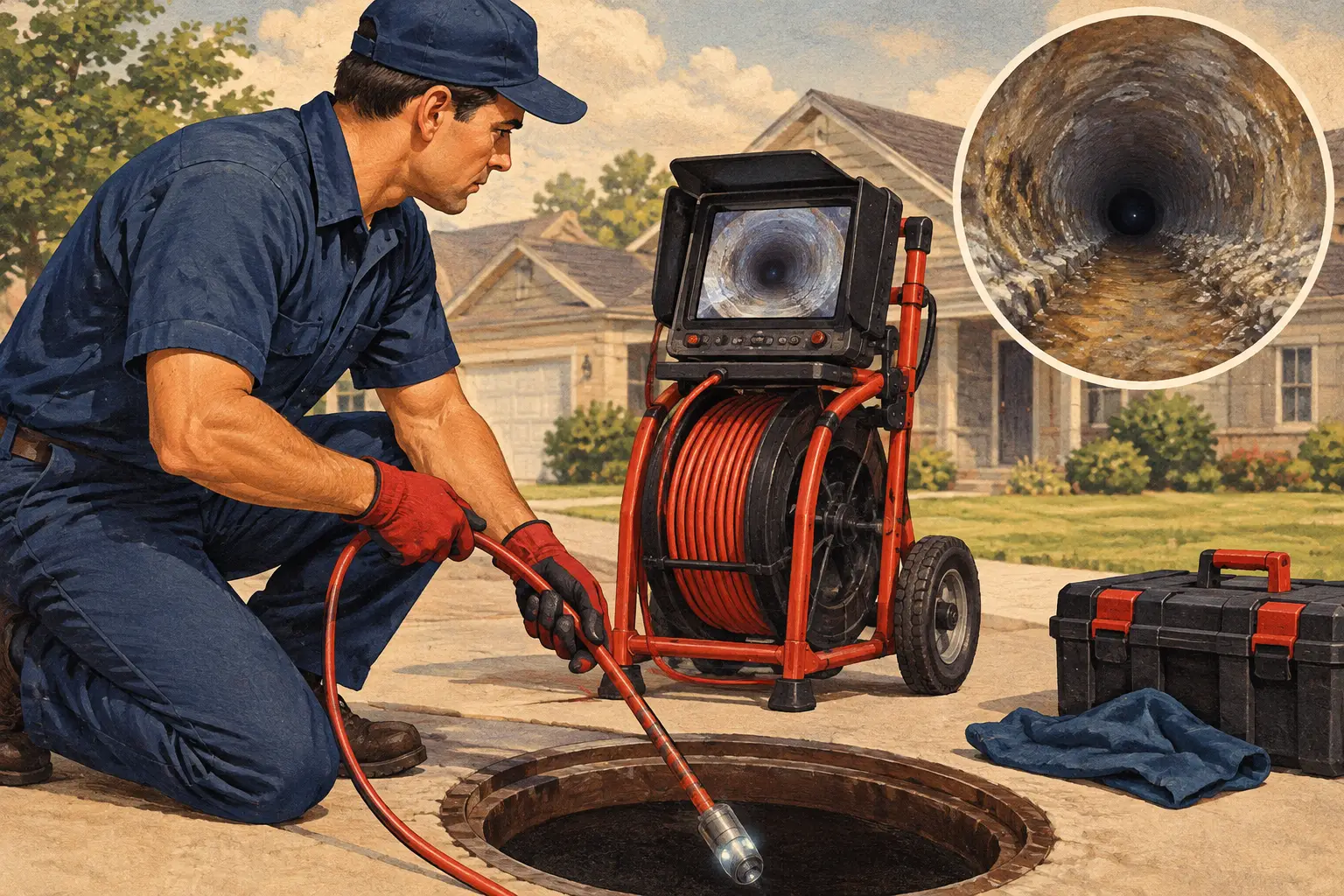
A sewer camera inspection review checklist helps you get more value from a plumbing visit than simply hearing that there is a clog. The camera footage can show where a problem sits, what the pipe condition looks like, and whether a simple cleaning is likely to help. For homeowners, property managers, and small businesses, the key is knowing what to review before agreeing to the next step.
A sewer camera is a diagnostic tool, not a repair by itself. It gives the plumber and property owner a view inside a drain or sewer line that cannot be seen from the surface. Clear footage and a clear explanation can turn a frustrating backup, recurring slow drain, or unexplained odor into a practical plan.
What a Sewer Camera Inspection Can Tell You
A professional camera inspection involves feeding a specialized camera through an accessible drain opening or cleanout. The live video shows the interior of the line as the camera travels toward the city connection or another point in the drainage system.
The inspection may reveal buildup, grease accumulation, root intrusion, scale, separated joints, cracks, pipe offsets, or a blockage. It can also help identify whether the concern appears limited to one branch drain or affects the main sewer line serving the property.
For North Texas properties, root growth and soil movement can be meaningful factors. Older homes may have aging pipe materials or connections that deserve closer attention, while newer homes can still experience construction debris, buildup, or a shifted fitting. The footage should guide the recommendation rather than assumptions based on the age of the home alone.
A camera does have limits. It may show water sitting in a line, but additional evaluation can be needed to confirm the exact cause of a low spot or drainage issue. Heavy blockage can also prevent the camera from traveling the full length of the pipe. In that situation, clearing the line first may be necessary before a complete inspection is possible.
Sewer Camera Inspection Review Checklist
Before the technician leaves, review the inspection with the person who performed it. You do not need plumbing experience to ask for a straightforward explanation of what appeared on the screen and what it means for your property.
Use this checklist to keep the conversation focused:
- Confirm which line was inspected, such as a kitchen drain, bathroom branch line, or main sewer line.
- Ask whether the camera reached the intended endpoint or whether a blockage stopped progress.
- Request the location and approximate distance of each concern from the access point.
- Ask what material appears to be causing the issue, including roots, grease, scale, debris, or damaged pipe.
- Clarify whether the condition calls for cleaning, monitoring, repair, or further diagnostic work.
- Ask whether the plumber can locate and mark a concern above ground when repair planning is needed.
The most useful inspection review connects the video to your symptoms. If only one shower is slow, a nearby branch drain may be the source. If multiple fixtures drain slowly, toilets gurgle, or water backs up at the lowest drain in the home, the main line needs closer attention. A qualified plumber should explain that connection in plain language.
Check the Footage, Not Just the Diagnosis
You should be able to see the condition being discussed. The video does not have to be perfect - water, residue, and pipe turns can affect visibility - but the technician should point out the issue as it appears.
Ask to see the beginning and end of any suspected problem area. For example, a small amount of root intrusion is different from a line that is heavily filled with roots. A single offset joint may be manageable, while repeated separations or visible pipe damage may affect the repair approach.
If the line was cleaned before the camera inspection, that is often helpful because it allows a better view of the pipe walls. At the same time, ask what was found during the cleaning and whether the post-cleaning footage shows permanent damage or simply residue that remains after the blockage is removed.
Verify the Location of the Problem
Location affects the repair decision. A concern near a cleanout may be easier to access than one under a driveway, landscaping, or interior flooring. The camera distance counter provides a useful reference, but it is not always enough for excavation planning by itself.
When a repair is being considered, ask whether electronic locating equipment was used to identify the position and depth of the camera head from above ground. This helps define the affected area and avoids relying on guesswork. It also gives property managers a clearer record for maintenance planning.
Do not assume every visible imperfection requires immediate replacement. Pipes can have minor scale, staining, or isolated joint irregularities while still functioning adequately. The decision depends on the severity of the condition, the frequency of backups, whether the line can be cleaned effectively, and the risk of disruption if the issue worsens.
Questions to Ask Before Approving Work
Once the camera review identifies a concern, the next question is what solution matches the condition. Ask the plumber to explain the available options and why one is recommended. A dependable recommendation should match the footage, the line material, and the way the property is experiencing the problem.
For buildup, grease, or root intrusion, professional drain cleaning may restore flow. Cleaning can be an appropriate first step when the pipe remains structurally sound. However, if the inspection shows a collapsed section, substantial separation, or recurring root entry through damaged joints, cleaning alone may offer only temporary relief.
Ask whether the proposed work addresses the cause or mainly relieves the immediate symptom. Both can have a place. Restoring drainage quickly matters when a home or business is disrupted, while a longer-term repair plan may be appropriate when the camera identifies a structural concern.
It is also reasonable to ask what happens if the line cannot be fully inspected. In some cases, a blockage must be removed before a camera can pass through. In others, additional access or diagnostic work may be needed. A clear explanation of what is known, what remains uncertain, and what the next step will confirm is a sign of a careful inspection.
When to Schedule a Camera Inspection
A camera inspection is especially useful when drain trouble repeats after cleaning, several fixtures are affected at once, or a backup occurs without an obvious cause. It can also be valuable before a targeted sewer line repair, after major root removal, or when a property manager needs to document the condition of a problem line.
A one-time slow sink does not always require a sewer camera. The right service depends on the symptoms and where they occur. Starting with a professional evaluation helps avoid treating a main-line issue as a minor fixture clog or, just as importantly, overreacting to a simple localized blockage.
For properties in Plano, McKinney, Allen, Richardson, Rockwall, Royse City, and nearby North Texas communities, prompt attention can prevent a drain issue from becoming a larger interruption. Keep notes on when backups occur, which fixtures are affected, and whether the issue returns after service. That information helps the technician use the camera inspection more effectively.
Turn the Inspection Into a Clear Plan
The best outcome from a camera inspection is not a confusing video file. It is a clear understanding of the pipe condition, the location of the concern, and the next action that makes sense for your property. Keep a copy of the inspection findings when available, especially if the line has a recurring history.
If you are dealing with repeated drain backups or want a professional review of a suspected sewer line problem, MasterTex Plumbing and Drain can help evaluate the issue and explain the findings clearly. A careful camera inspection gives you a practical basis for moving forward with confidence.