
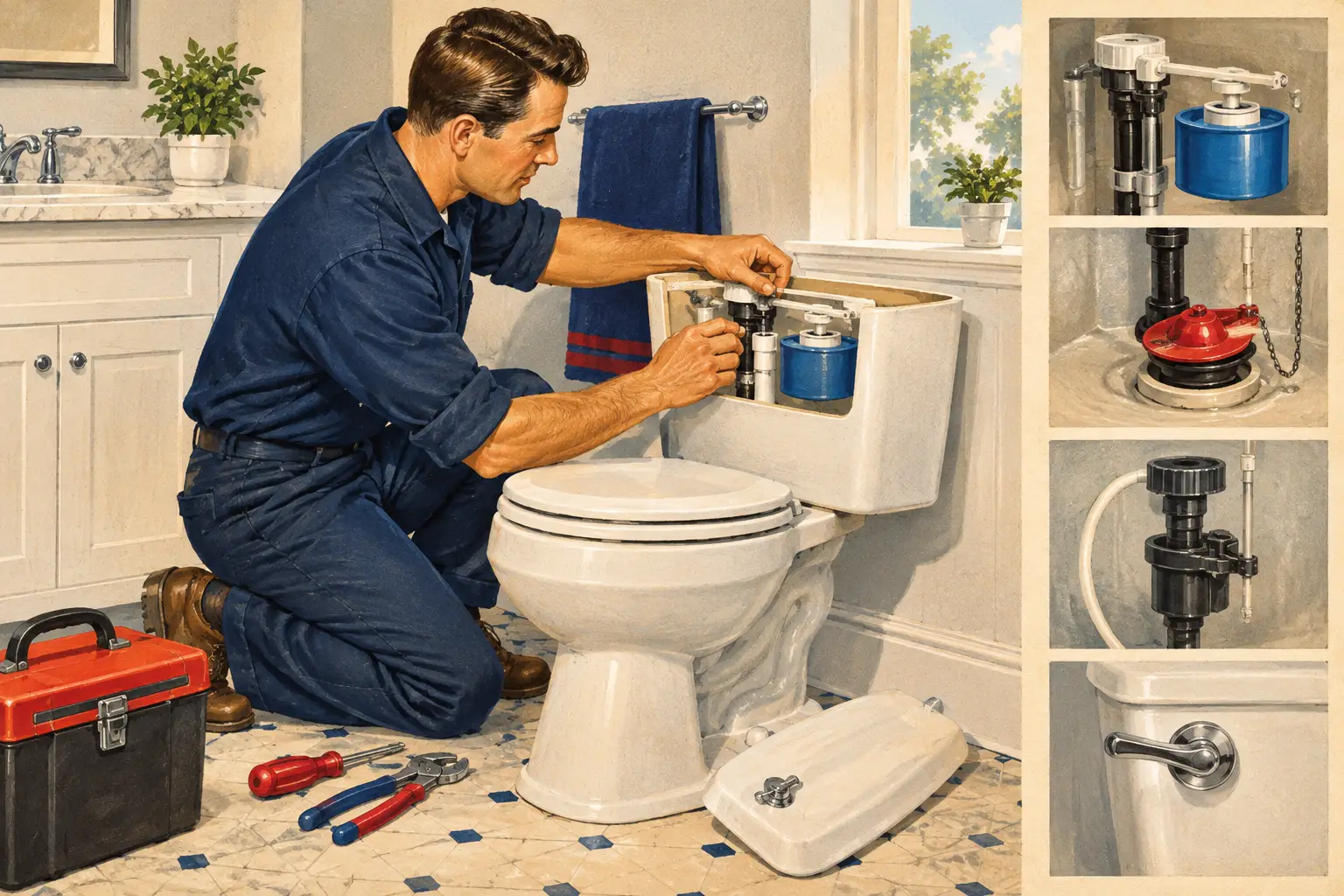
A toilet that keeps refilling after a flush is more than an annoying sound in the background. It can waste a significant amount of water, strain aging toilet components, and signal a small problem that may grow worse. Knowing how to stop toilet running usually starts with identifying which part inside the tank is allowing water to escape or continuing to add water.
Most running toilets have a straightforward cause: a flapper that is not sealing, a chain that is out of position, or a fill valve set too high or no longer working properly. You can safely inspect these common issues before deciding whether a repair is within reach or it is time to schedule professional plumbing service.
Why a Toilet Keeps Running
Your toilet tank holds water until you flush. When the handle is pressed, the flapper lifts and lets water move into the bowl. After the flush, the flapper should settle back onto the flush valve opening and create a watertight seal. At the same time, the fill valve refills the tank and shuts off once the water reaches the proper level.
A running toilet means one of those steps is not happening correctly. Water may be leaking slowly from the tank into the bowl, which causes the fill valve to cycle on and off. Or, the fill valve may be allowing the tank to overfill, sending water down the overflow tube continuously.
The sound can provide a useful clue. A brief refill every few minutes often points to a leaking flapper. A steady hissing sound usually indicates that water is still entering the tank through the fill valve.
Start With a Quick Tank Inspection
Lift the tank lid carefully and place it on a towel or other protected surface. Porcelain lids can crack easily. Then flush the toilet and watch what happens inside the tank as it refills.
Look for the water level, the flapper at the bottom of the tank, the chain attached to the flush handle, and the fill valve assembly. If water is rising into the open overflow tube in the center of the tank, focus on the fill valve and float adjustment. If the tank appears full but the toilet starts refilling later, check the flapper and its chain first.
If water is overflowing from the tank, leaking onto the floor, or the shutoff valve near the wall does not work, turn off the water if possible and contact a plumber. A running toilet inside the tank is usually manageable, but water outside the tank needs prompt attention.
How to Stop Toilet Running by Checking the Flapper
The flapper is the flexible rubber or silicone seal at the bottom of the tank. It is one of the most common reasons a toilet runs. Over time, it can warp, become stiff, collect mineral buildup, or fail to sit evenly on the flush valve opening.
With the tank full and quiet, place a few drops of food coloring in the tank water. Do not flush. Wait about 10 to 15 minutes and check the bowl. If colored water appears in the bowl, water is leaking past the flapper.
First, make sure the flapper is resting flat and centered over the opening. Sometimes it gets caught on the chain or folds slightly after a flush. Gently wipe the flapper and the rim beneath it with a soft cloth to remove loose debris. Flush once and watch it settle back into place.
If the flapper is visibly worn, cracked, misshapen, or still leaking after cleaning, it likely needs replacement. Turn off the water supply at the valve behind or beside the toilet, flush to empty the tank, and remove the old flapper according to its mounting style. A replacement needs to match the toilet's flush valve size and connection style. If the flush valve rim is damaged or the replacement does not seal, professional repair is the better next step.
Check the Flapper Chain
A chain that is too short can hold the flapper slightly open. A chain that is too long can get caught underneath the flapper and create the same problem. There should be a small amount of slack when the flapper is fully closed.
Adjust the chain so it lifts the flapper completely when you flush but does not pull on it while the toilet is at rest. Test the toilet several times after adjusting it. This small correction can stop a toilet from running without replacing any parts.
Check the Fill Valve and Float
If water continues to run into the overflow tube, the water level in the tank is too high. The fill valve controls that level, while a float signals when it is time for the valve to shut off.
Many newer toilets use a vertical fill valve with a small float cup that moves up and down with the water. Older toilets may have a float ball attached to an arm. In either design, the tank water should stop below the top of the overflow tube, often at the marked water line inside the tank.
Use the adjustment feature on the fill valve to lower the water level slightly. The exact method varies by valve type, so follow the directional markings on the part rather than forcing it. Make a small adjustment, flush, and allow the tank to refill before checking the result.
A fill valve that hisses continuously, fills slowly, or fails to shut off even after adjustment may be worn out. Replacing a fill valve is a common toilet repair, but a plumber can handle it quickly when the parts are corroded, the valve is difficult to access, or the toilet has an uncommon tank configuration.
Inspect the Refill Tube
The small flexible tube connected to the fill valve should be clipped to the top of the overflow tube. It should not extend down inside the overflow tube. If it is pushed too far into the tube, it can create a siphoning effect that keeps drawing water from the tank.
Secure the refill tube at the top of the overflow tube and make sure it is not kinked. This takes only a moment to check and is easy to overlook.
Test the Repair Before Replacing More Parts
Once you have adjusted or repaired the likely cause, flush the toilet two or three times. Watch the flapper close, confirm that the tank fills to the proper level, and listen for the fill valve to shut off. Leave the bathroom quiet for several minutes to make sure the refill cycle does not restart.
Do not assume a quiet toilet right after a flush means the problem is solved. A slow flapper leak may take several minutes to trigger another refill. The food-coloring test is especially helpful when the issue comes and goes.
When to Call a Plumber for a Running Toilet
A professional plumber is the right choice when the cause is unclear or a simple adjustment does not last. This is especially true if the tank has cracked porcelain, the flush valve seat is damaged, the water shutoff valve is seized, or water is showing up around the base of the toilet.
Property managers and business owners may also prefer service when multiple toilets are affected or a restroom needs to stay available. Repeated running can be a symptom of aging components, hidden leaks, or installation issues that deserve a complete inspection rather than another temporary adjustment.
For homeowners in Plano, McKinney, Allen, Richardson, Rockwall, Royse City, and surrounding North Texas communities, MasterTex Plumbing and Drain can diagnose persistent toilet problems and make the necessary repair without the guesswork.
Keep the Problem From Returning
Check inside toilet tanks occasionally, especially if you hear an unexplained refill sound at night or notice a toilet flushing differently than usual. Avoid forcing the handle, slamming the tank lid, or bending internal components to make them fit. Toilet parts are simple, but they need to move freely and seal correctly.
A toilet should flush, refill, and become completely quiet. If yours does not, addressing the sound early can save water and prevent a small tank repair from becoming a larger plumbing inconvenience.