
A kitchen sink that backs up every few weeks is not the same problem as a main line that sends water toward a floor drain. That difference is why the choice between a drain auger versus hydrojetting matters. Both are professional drain-cleaning methods, but they remove blockages in very different ways. Choosing the right one starts with identifying what is inside the pipe, where the obstruction sits, and whether the pipe itself is in sound condition.
For homeowners, property managers, and small businesses across North Texas, the best answer is rarely about using the biggest machine available. It is about using the method that clears the immediate problem while making sense for the drain system behind it.
Drain Auger Versus Hydrojetting: The Core Difference
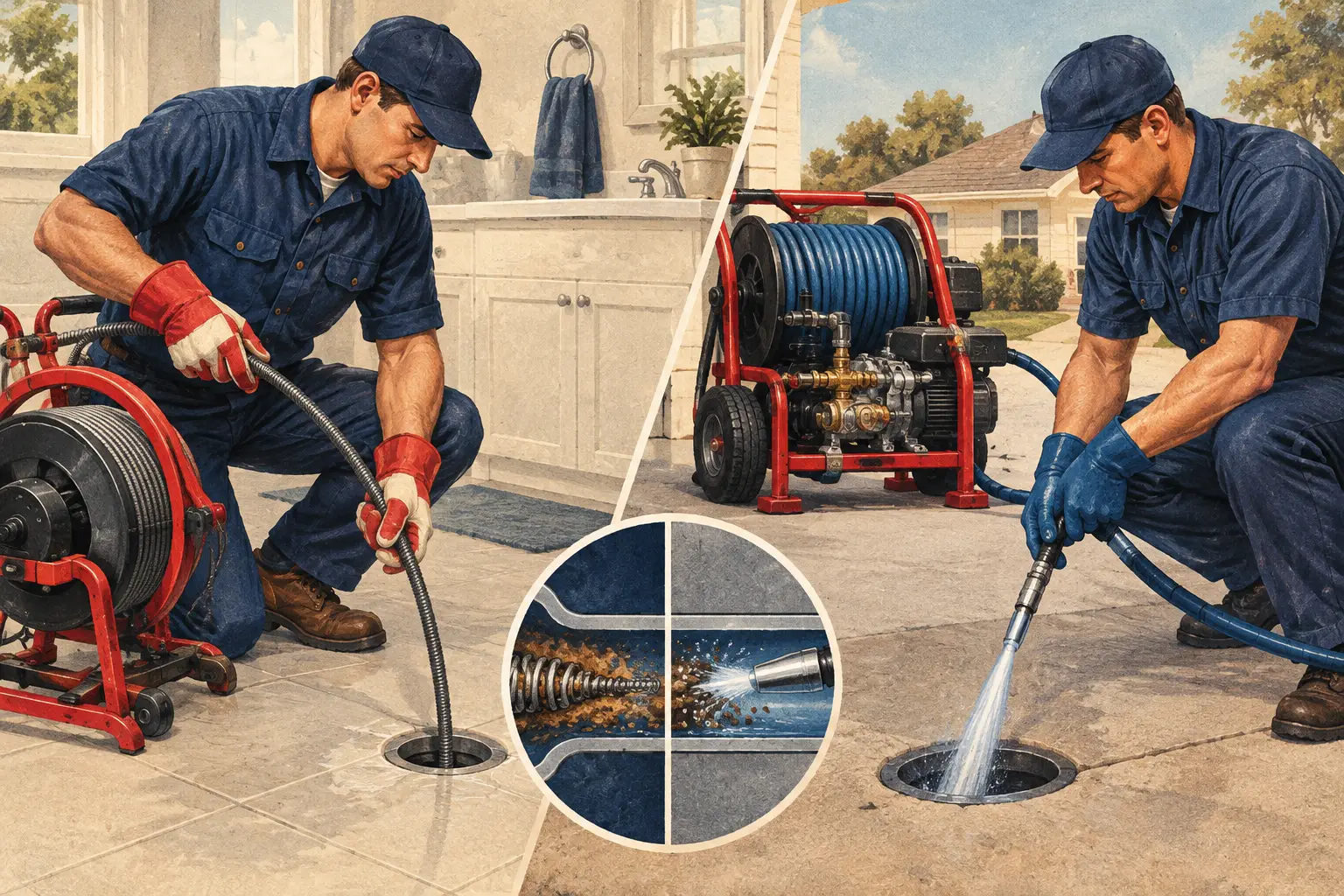
A drain auger, often called a drain snake, uses a flexible cable with a cutting or retrieval head. A trained plumber feeds the cable through the drain opening or a cleanout until it reaches the blockage. As the cable rotates, the head can break apart, bore through, cut, or pull back material that is stopping the flow.
Hydrojetting uses a specialized hose and nozzle that sends high-pressure water through the pipe. The nozzle directs water forward to help move through the blockage and backward to scour the pipe walls as it travels. Instead of simply creating an opening through debris, hydrojetting is designed to wash buildup away from a larger section of the line.
In plain terms, an auger is often the better tool for reaching and opening a specific obstruction. Hydrojetting is often the better choice when grease, sludge, scale, or other buildup is coating the pipe and contributing to repeat clogs.
When a Drain Auger Is the Better Choice
An auger is a practical solution for many common drain problems. Hair and soap residue in a bathroom drain, paper-related clogs in a toilet line, or a localized blockage in a branch drain may respond well to cabling. The goal is to restore flow by physically breaking through or retrieving the material in the pipe.
It can also be the preferred first step when the drain needs diagnosis. If a line is completely blocked, a plumber may use an auger to open enough of a path for water to move and for a camera inspection to become possible. That inspection can show whether the issue was a one-time clog or a sign of a larger condition further down the line.
Augering is not automatically a permanent fix, however. A cable can punch through a grease blockage without removing the greasy coating along the pipe walls. Water may drain again, but the buildup remains and can collect debris soon after. That is why a drain that clogs repeatedly deserves more than a quick reopening.
A professional also selects the cable size and head based on the line. Using the wrong equipment or forcing a cable through a difficult blockage can damage fixtures or create a bigger plumbing problem. A drain auger is a precise tool when used correctly, not a one-size-fits-all answer.
When Hydrojetting Makes More Sense
Hydrojetting is especially useful when recurring clogs point to widespread buildup. Kitchen lines often accumulate grease and food residue over time. Commercial sinks, break rooms, and older drain lines can develop a narrowed interior as residue collects along the walls. In these situations, making a small opening through the blockage may not be enough.
The high-pressure water used in hydrojetting can clean a much longer stretch of pipe than a cable alone. It helps remove loose sludge, grease, mineral buildup, and debris that can trap more material. For a property with frequent backups in the same line, that more complete cleaning may reduce the cycle of repeated service calls.
Hydrojetting is also useful after a camera inspection reveals a line that is intact but heavily coated. The inspection matters because water pressure is not appropriate for every pipe condition. Older, damaged, offset, or compromised pipes may require a different approach. A responsible plumber evaluates the line first rather than treating hydrojetting as the default answer for every backup.
For some commercial properties, scheduled hydrojetting can be a sensible maintenance service. A restaurant-related kitchen line and a rarely used office restroom have very different drain demands. The cleaning plan should reflect how the property is used, not a generic calendar recommendation.
Pipe Condition Changes the Decision
The material causing the clog matters, but the condition of the pipe matters just as much. A line can be blocked because of ordinary buildup, but it can also have structural issues that cleaning alone will not correct. A camera inspection can help identify concerns such as a separated connection, a belly in the pipe, heavy scale, or intrusion from roots.
Neither method should be presented as a cure for a damaged line. An auger may get through a blockage caused by roots, for example, while hydrojetting may flush away debris around the affected area. Yet if there is an opening that allows roots to enter, the underlying issue can return. The right recommendation should distinguish between clearing the drain today and addressing the reason the problem keeps coming back.
This is also why a professional may recommend starting conservatively. If the issue appears localized and the pipe condition is unknown, an auger and inspection may provide the information needed to make a better next decision. If the line is suitable and coated with buildup, hydrojetting may then provide a deeper clean.
Signs Your Drain Needs More Than a Quick Fix
A single slow sink after a busy weekend may be a straightforward clog. Repeated symptoms are different. If one or more of the following issues keeps happening, it is worth having the line evaluated rather than repeatedly treating the surface symptom:
- The same sink, tub, or toilet clogs again soon after being cleared.
- Multiple fixtures drain slowly or back up at about the same time.
- Water appears in a tub or shower when another fixture is used.
- Kitchen drains slow down despite normal use and routine care.
- A business experiences recurring drain interruptions that affect daily operations.
These symptoms do not all point to the same cause, but they indicate that the blockage may be beyond the fixture trap. The location of the backup helps a plumber determine whether the concern is in a branch line or a larger drain line serving several fixtures.
Why Professional Evaluation Is Worth It
Drain cleaning equipment has enough power to solve a problem quickly, but it needs to be matched to the line. The wrong tool can leave buildup behind, fail to reach the true obstruction, or create unnecessary risk for older plumbing. A professional assessment considers access points, pipe size, drain use, the history of backups, and the condition of the line.
At MasterTex Plumbing and Drain, the goal is to recommend the service that fits the actual drain problem, whether that means targeted cabling, hydrojetting, camera inspection, or a combination of services. Clear communication matters because homeowners and property managers need to know what was found, what was cleaned, and what may need attention later.
Choosing Between the Two Methods
If the clog is isolated and caused by a specific obstruction, a drain auger may be the efficient choice. If the line has recurring backups from grease or widespread buildup, hydrojetting may offer a more thorough cleaning. If there is any concern about pipe damage or an unknown condition, inspection should guide the decision.
The most useful next step is to pay attention to the pattern, not just the latest backup. A drain that repeatedly asks for help is usually telling you more than it seems.