
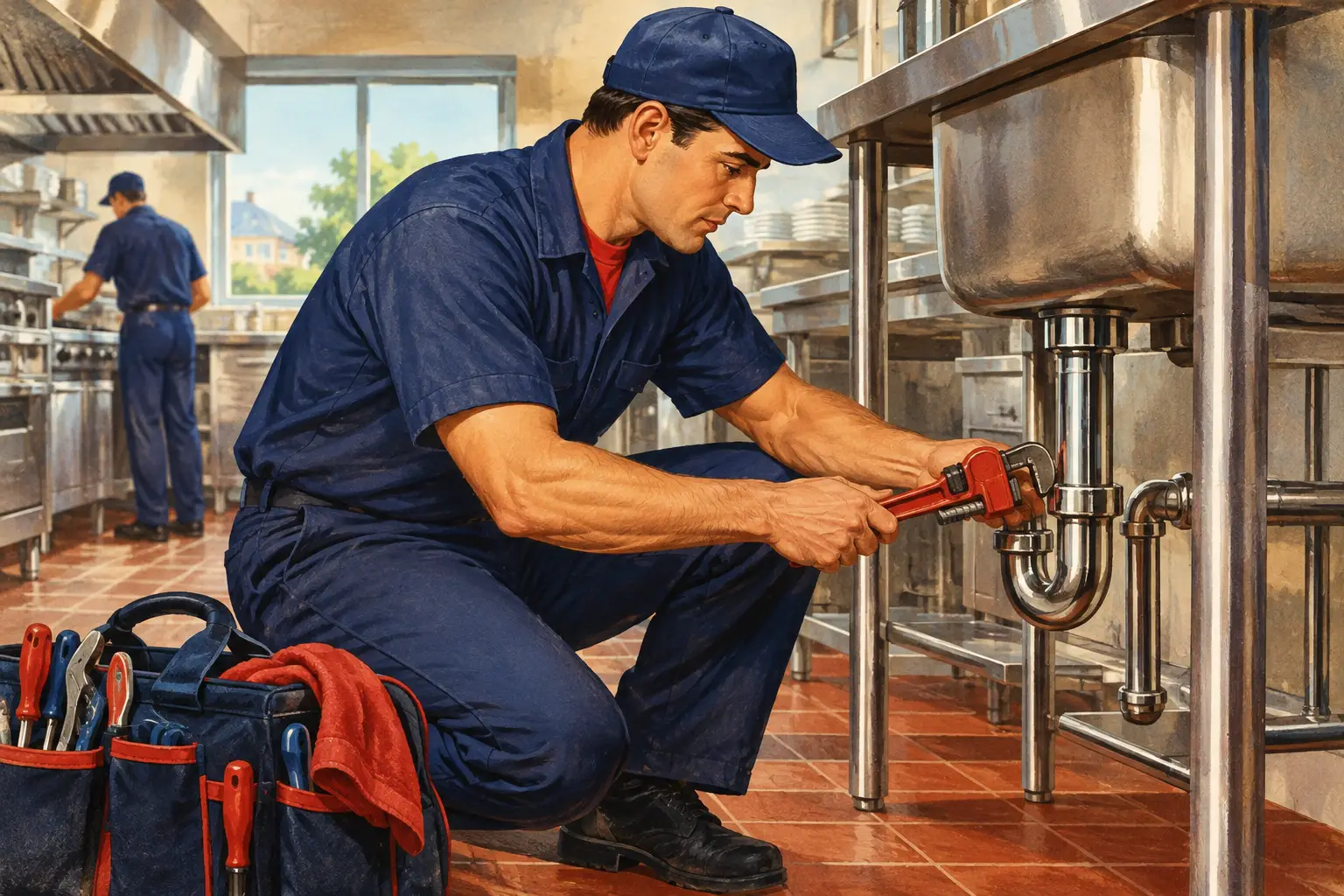
A restroom closure during a lunch rush, a slow floor drain in a busy kitchen, or a water heater that fails before opening time can disrupt far more than a plumbing fixture. Commercial plumbing maintenance gives business owners and property managers a practical way to find developing issues before they interrupt employees, customers, tenants, or daily operations.
For businesses across North Texas, plumbing problems often start small. A drain that takes a little longer to clear or a toilet that needs a second flush may not seem urgent. Left alone, however, those symptoms can become backups, water damage, unpleasant odors, and unexpected closures. A consistent maintenance plan helps protect the systems your operation relies on every day.
Why Commercial Plumbing Maintenance Matters
Commercial plumbing handles more frequent use than most residential systems. Restrooms, break rooms, kitchens, utility sinks, water heaters, and drain lines may serve dozens or hundreds of people in a single day. More use means more opportunities for buildup, worn components, leaks, and drainage issues to develop.
The main value of maintenance is not that it eliminates every emergency. A sudden pipe break or equipment failure can still happen. Instead, scheduled service reduces avoidable disruptions by catching warning signs early, cleaning problem drain lines before they block, and identifying parts that are wearing out.
For a retail store, office, restaurant, daycare, medical office, or multi-tenant property, the cost of a plumbing interruption includes more than the repair itself. Staff may lose access to required restrooms, customers may have a poor experience, and management has to shift attention away from the work that keeps the business moving. Preventive service helps make plumbing one less unpredictable part of the property.
What a Maintenance Visit Should Address
A useful maintenance visit is based on the building's fixtures, usage level, and history. A small professional office does not need the same service schedule as a restaurant or a high-traffic retail space. The right approach begins with understanding where the system has struggled before and which areas would create the biggest operational problem if they failed.
Drains and Sewer Lines
Drain lines deserve close attention because blockages often build gradually. Grease, food debris, paper products, soap residue, sediment, and other materials can narrow a line over time. Common warning signs include recurring slow drains, gurgling fixtures, sewer odors, water appearing around floor drains, and backups in more than one fixture.
Professional drain cleaning can remove buildup before it becomes a complete blockage. The best method depends on the pipe condition, the location of the line, and the material causing the restriction. Repeatedly clearing the same drain without identifying the cause may provide temporary relief, but it can allow the underlying problem to continue.
Restrooms and Fixture Performance
Commercial restroom fixtures take regular wear. During maintenance, a plumber can check toilets, urinals, faucets, flush valves, supply connections, shutoff valves, and visible drain connections. Small leaks at a toilet base, under a sink, or near a supply line can waste water and damage surrounding finishes if they go unnoticed.
Fixture performance matters, too. A toilet that runs intermittently, a faucet that will not shut off cleanly, or a flush valve with inconsistent operation should be addressed before it becomes a service call during business hours. Maintenance helps property teams plan repairs around their schedule whenever possible.
Water Heaters and Hot Water Equipment
Many commercial operations depend on reliable hot water for handwashing, cleaning, food service, or employee facilities. A maintenance review can include checking for leaks, corrosion, unusual sounds, temperature concerns, and visible connection issues.
How often water-heating equipment needs attention depends on its type, age, water demand, and manufacturer requirements. High-use equipment generally benefits from closer monitoring. Waiting until there is no hot water can turn a manageable repair or replacement discussion into an urgent operational issue.
Visible Pipes, Valves, and Utility Areas
Mechanical rooms, janitor closets, break rooms, and utility spaces are easy to overlook until water is on the floor. Routine inspections can identify moisture, corrosion, damaged insulation, aging valves, and signs of past leaking. Staff should also know where the building's main water shutoff is located and who has authority to use it during an emergency.
A valve that has not been exercised or inspected for years may not operate as expected when it is urgently needed. Testing and evaluating accessible valves during planned service can make a meaningful difference when a leak occurs.
Setting the Right Maintenance Schedule
There is no single schedule that works for every commercial property. Businesses with heavy restroom traffic, active kitchens, multiple tenants, or a history of drain backups often need more frequent attention. A small office with limited daily use may need a simpler inspection plan.
As a starting point, many properties benefit from periodic plumbing inspections and drain evaluations, with frequency adjusted after a plumber reviews the system. If a line has recurring buildup, waiting for a full blockage is usually not the best strategy. More frequent preventive cleaning may be less disruptive than repeated emergency calls.
Keep a simple record of drain cleanings, repairs, backups, fixture replacements, and customer or employee complaints. Patterns in those records can help reveal whether a specific restroom, kitchen line, or portion of the building needs a different maintenance approach. Documentation also helps a new facility manager understand the property's plumbing history without starting from scratch.
Warning Signs That Should Not Wait
Maintenance works best when routine concerns are handled before they become urgent. Some symptoms, however, call for prompt professional attention rather than waiting for the next scheduled visit.
If sewage backs up into a sink, toilet, or floor drain, restrict access to the affected area and arrange service quickly. Water near electrical equipment, an active leak that cannot be isolated, or a sudden loss of water pressure also deserves immediate attention. Multiple slow or backing-up fixtures may indicate a larger drainage issue beyond one local clog.
Do not rely on repeated plunging or chemical drain cleaners to manage a recurring commercial drain problem. Those approaches may not address buildup farther down the line, and chemical products can be hard on certain pipes and fixtures. A professional assessment provides a clearer picture of what is happening and what service is appropriate.
How to Make Service Visits More Effective
A little preparation helps plumbing work move faster and gives your technician better information. Before a maintenance appointment, note which fixtures have been acting up, when the issue occurs, whether it affects one area or several, and what has been repaired previously. If staff notice odors, sounds, or intermittent backups, those details are useful even if the symptom is not present during the visit.
Access matters as well. Make sure utility rooms, restroom chases, under-sink areas, and mechanical spaces can be reached safely. For businesses that cannot pause operations easily, discuss preferred service windows ahead of time. Some work can be planned during slower periods, while active leaks and backups should be handled as soon as possible.
A qualified plumber should explain what was found in straightforward terms, identify priorities, and distinguish between an immediate repair and an item to monitor. This allows owners and managers to make informed decisions instead of reacting only when a system fails.
A Practical Partnership for Local Businesses
Commercial plumbing maintenance is most effective when it becomes part of normal property care, much like HVAC service or routine building inspections. The goal is not to over-service equipment. It is to give high-use plumbing systems the attention they need based on real conditions at the property.
MasterTex Plumbing and Drain helps North Texas businesses and property managers address drain concerns, plumbing repairs, and preventive service with a responsive, professional approach. Whether your property has recurring drain issues or you want a clearer maintenance plan, acting before the next disruption gives your team more control over the day ahead.